
Food Truck Water Tank System: Fresh Tank, Wastewater Tank and Pump
A food truck water tank system explained: how to size the fresh and waste water tanks, pick a pump and water heater, and fit them into your layout.
By the Food Truck Layout team
A food truck water tank system is four parts working as one: a fresh water tank, a pump, a water heater and a waste water tank. The pump pressurizes the fresh tank so the sinks run, and everything that drains lands in the wastewater tank. A mobile kitchen has no sewer connection, so those tanks are the entire plumbing system.
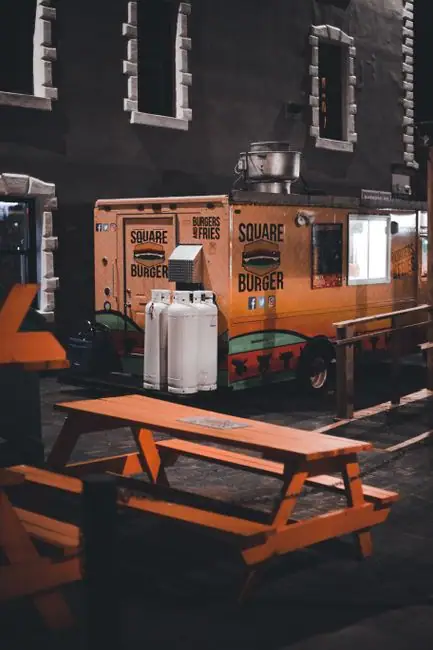
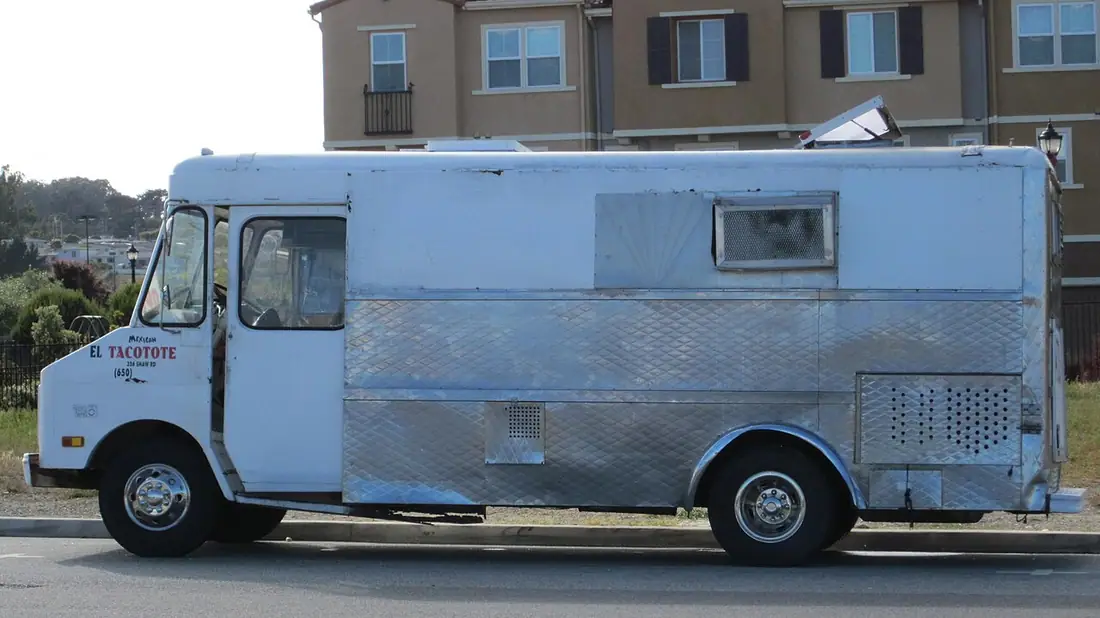
Sizing is where most builds get it wrong. Here is how to size both tanks, choose the pump and heater, and place the tanks without ruining your weight balance.
What a food truck water tank system includes
Five components, in order of flow:
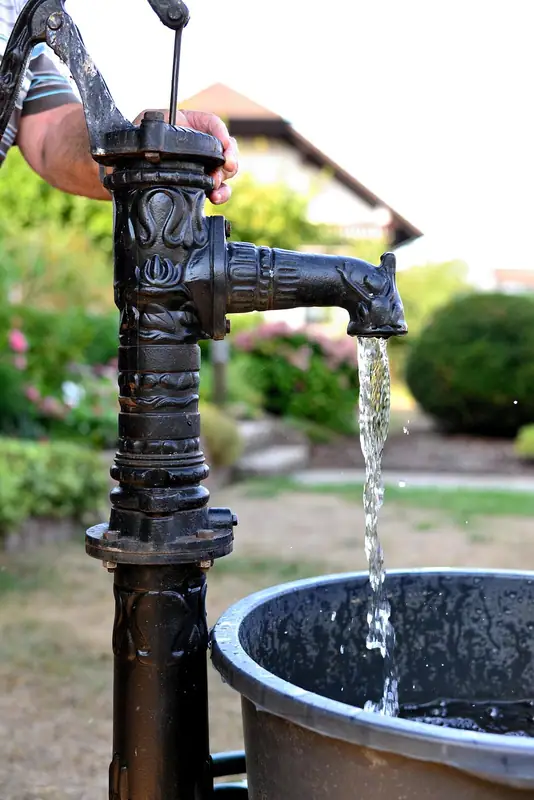
- Fresh water tank, potable rated and food grade, with a fill inlet and a vent.
- A 12-volt demand pump that starts when a faucet opens.
- A water heater, either a small electric tank or a propane unit, feeding the hot side of every sink.
- The sinks themselves, each with hot and cold water under pressure.
- Waste water tank sitting below the drains, with a valve for emptying.
The fresh water tank and wastewater tank entries define each piece on its own. The FDA Food Code is the model most states adopt, and it limits a mobile unit’s water tank inlet to 3/4 inch or smaller so the fitting can’t be used for another service.
| Fresh water tank | Waste water tank | |
|---|---|---|
| Holds | potable water | sink drain water |
| Sized by | menu, sinks, local minimum | the fresh tank plus a required margin |
| Serviced by | filling from an approved source with a potable hose | emptying at a commissary or approved dump point |
| Fittings | small inlet, vent, feed to the pump | large drain valve, vent, no shared lines with fresh |
How many gallons should the fresh water tank hold?
Add up what your sinks and prep need for one full service day, then compare that number with your health department’s minimum and take whichever is larger. A drinks-and-snacks menu needs the least. A truck with warewashing and a cooking line needs the most.
Start with the sink. A three-compartment sink with 10 by 14 inch bowls filled six inches deep holds about 3.6 gallons per bowl, so roughly 11 gallons for one wash, rinse and sanitize cycle. Two cycles in a shift is 22 gallons before anyone washes their hands.
Then work through the rest:
- Wash cycle volume times the cycles you expect.
- Handwashing at the hand-washing sink, which gets used far more often than people guess.
- Food prep water: rinsing produce, filling pots, drinks.
- Floor and surface cleaning at the end of the night.
- Add about 20 percent margin, then round up to the next stock tank size.
Local minimums vary a lot by state and county, and some set a floor based on which sinks you carry. The gallons a food truck needs answer covers that range, and the food truck sink requirements guide covers which sinks drive the number up.
How to size the waste water tank for a food truck
The waste tank is always the bigger of the two. Many jurisdictions require it to hold more than the fresh tank, commonly about 15 percent more, and some ask for a wider margin, so treat your local rule as the real spec.
The margin exists because drain volume isn’t limited to the water you brought. Ice melt, spilled drinks, thawing liquid and mop water all go down the same drains. That mix is what plumbing codes call greywater, and it fills faster than a napkin estimate suggests.
If the floor space allows it, buy more waste capacity than the minimum. Running out mid-service means shutting down.
Pump, water heater and sink hookups
A 12-volt diaphragm demand pump is the standard choice. It senses the pressure drop when a faucet opens, runs until pressure builds back, then stops. Common RV-style pumps are rated around 3 to 5 gallons per minute, which is enough for two or three fixtures.
Add an inline strainer ahead of the pump and an accumulator tank after it. The strainer protects the pump, and the accumulator stops the rapid on-off cycling that makes a faucet sputter. Some states put a number on the result: Oregon requires at least 20 psi at the sinks.
For hot water, a 2.5 to 6 gallon electric heater tucks under a counter and runs off your generator or shore power. A propane tankless unit saves space and electrical load but needs venting and a gas line. Either way, check the minimum hand sink temperature your inspector enforces, since it is often 100 degrees Fahrenheit.
Where the tanks sit in the layout
Water is heavy. One gallon weighs about 8.34 pounds, so a 60 gallon fresh tank adds roughly 500 pounds and a 70 gallon waste tank adds close to 585 pounds when full. Keep both low, near the axle, and split across the centerline rather than stacked on one side. The food truck weight answer explains why that matters for your chassis rating.
Gravity sets the vertical order. The waste tank has to sit below the lowest sink drain, which usually means under the floor on a step van or under the base cabinets on a trailer.
Put the fill inlet and the waste drain valve on opposite sides or well apart, and label both. Nobody should be able to confuse a potable hose with a dump line in the dark.
Leave access panels. Tanks need cleaning, pumps fail, and an inspector will want to see the fittings. Block them in early with the rest of your equipment using the how to design a food truck layout steps.
Filling and dumping
You fill from an approved potable source with a food-grade hose that touches nothing else. You dump at your commissary or another approved site, never on the street, the ground or a storm drain. Keep the receipts or logs your permit asks for, because that paperwork is often what gets checked first.
Lay out your tanks in Food Truck Layout
Draw the tanks before you buy them. Open the free floor plan editor on Food Truck Layout, set your truck or trailer size, and place the fresh tank, waste tank, pump, heater and sinks to scale so you can see what space is left for cooking.
Frequently asked questions
How big should a food truck water tank system be?
Size it from your sinks and menu, not a rule of thumb. Add up the water one full wash cycle takes, multiply by the cycles you expect in a shift, then add handwashing, food prep and end-of-night cleaning. Compare that total with your health department's minimum and round up to the next stock tank size. Short drink menus need far less than a full cooking line.
Does the waste water tank have to be bigger than the fresh water tank?
Usually yes. Many health departments require the wastewater tank to hold more than the fresh tank, often around 15 percent more, and some ask for a wider margin. The reason is practical: drain water includes ice melt, spilled drinks and anything else poured out, so waste volume can pass the amount of fresh water you carried in. Confirm the rule before you buy tanks.
Where do the water tanks go on a food truck?
Low and close to the axle. Under the floor between the frame rails is common on a step van, and under the counters is common on a trailer. The wastewater tank has to sit below the sink drains so they empty by gravity. Both tanks need an access panel for cleaning and a drain valve you can reach from outside the unit.